BS in Electrical Engineering
Electrical engineers design, develop, test, and supervise the manufacture of electrical equipment, such as electric motors, radar and navigation systems, communications systems, and power generation equipment. They also design electrical devices and systems using components such as conductors, coils, magnets, batteries, switches, resistors, capacitors, inductors, diodes, and transistors. Some electrical engineers conduct or write specifications for testing devices to assess their performance, reliability, and long-term durability. Nearly all electrical and electronic devices, from the generators at an electric power plant to the microprocessors in your phone, depend on the expertise of electrical engineers.
Designed to help students find innovative solutions to complex technical problems, our curriculum provides a rigorous foundation in physics, mathematics, and computing. Core courses in electronics and digital systems introduce students to the major and begin to develop each student’s skills in problem analysis and experimental design. The program concludes with a year-long design experience, during which students undertake a team project in collaboration with industry sponsors.
In addition to the carefully designed core, our curriculum includes 12 flexible credits of technical and ECE electives. Electives pair well with certificate options, allowing students to demonstrate more than just the core competencies to employers.
Emphasis Areas
- Biomedical Engineering
- Computer Engineering
- Integrated Circuit Design
- Semiconductor Devices and Processing
- Signals, Systems, and Controls
- Power Systems Engineering
Learn More about Electrical Engineering
- See degree requirements for the BSEE
- View the four-year plan for the BSEE
- Take a look at the courses we offer in Electrical Engineering
- Read about the application process for Electrical Engineering
- Schedule an appointment with an advisor for Electrical Engineering
BS in Computer Engineering
Computer Engineering is a subdiscipline of electrical engineering focused on the design, testing, implementation, and maintenance of the software and hardware components found in modern computing systems, computer-controlled equipment, and networks of intelligent devices.
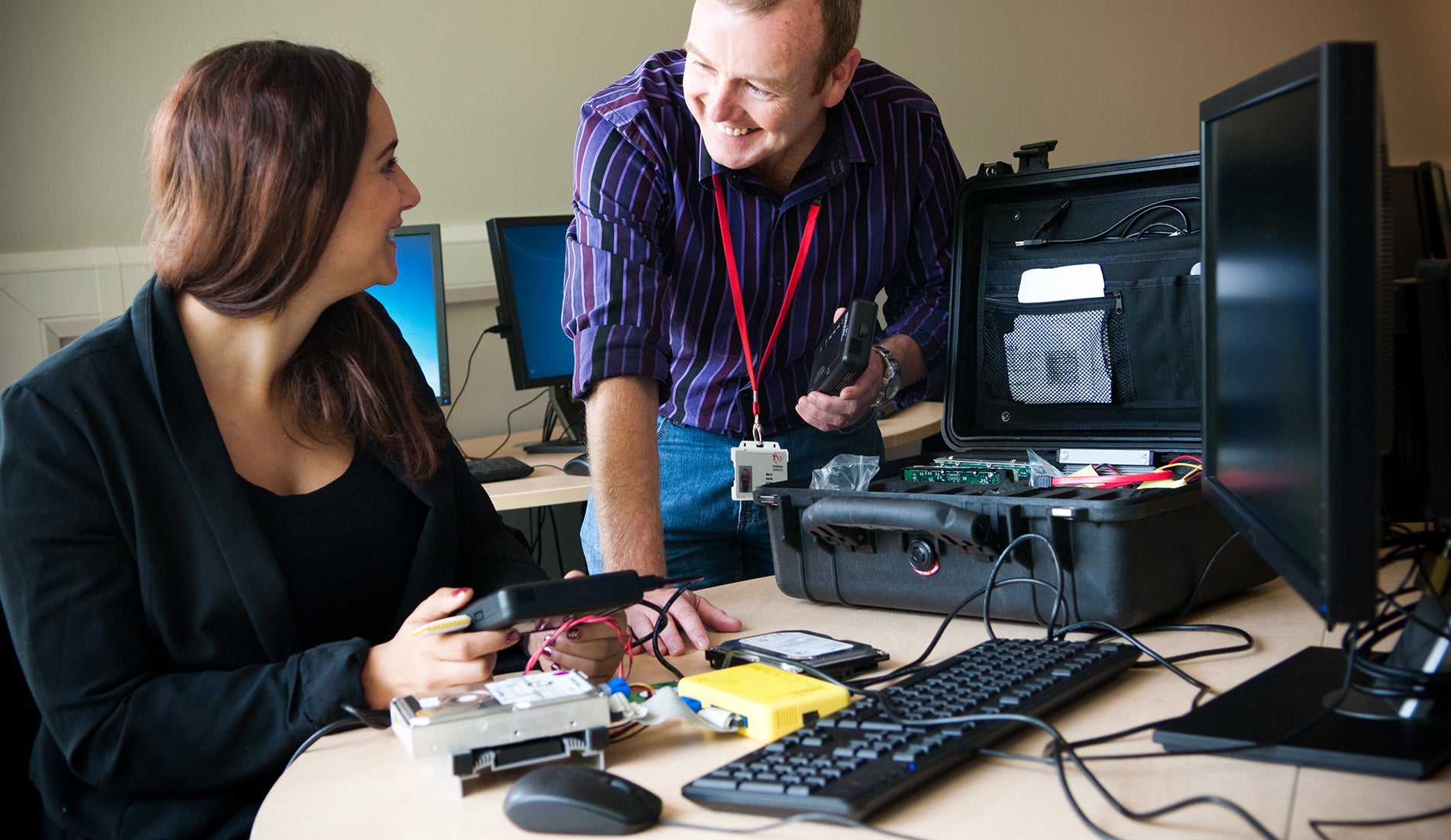
Computer engineers research, create, and design the multitude of secure systems we use every day. Making the world safer, smaller, and smarter than ever before, computer engineers design the technology needed to navigate today’s complex interconnected environment. Integrating principles of computing, cryptography, mathematics, science, and engineering, computer engineers are creating better, more secure computing hardware, software, networks, and algorithms.
This degree is a pathway for students to learn and apply engineering and computer science principles beyond the constraints of a traditional, single-discipline-focused degree program. For instance, a graduate from this program will be able to work efficiently in an automation environment where the proposed Computer Engineering degree has provided the electrical engineering background/principles for overall systems design, with the ability to use programming to automate systems and to understand how cyber hacking can impact the daily function of the systems. The quantitative, problem-solving skill set that comes with a systems engineering background will also provide a unique perspective and competitive edge for students seeking advanced degrees or industry certifications within their professional field of interest.