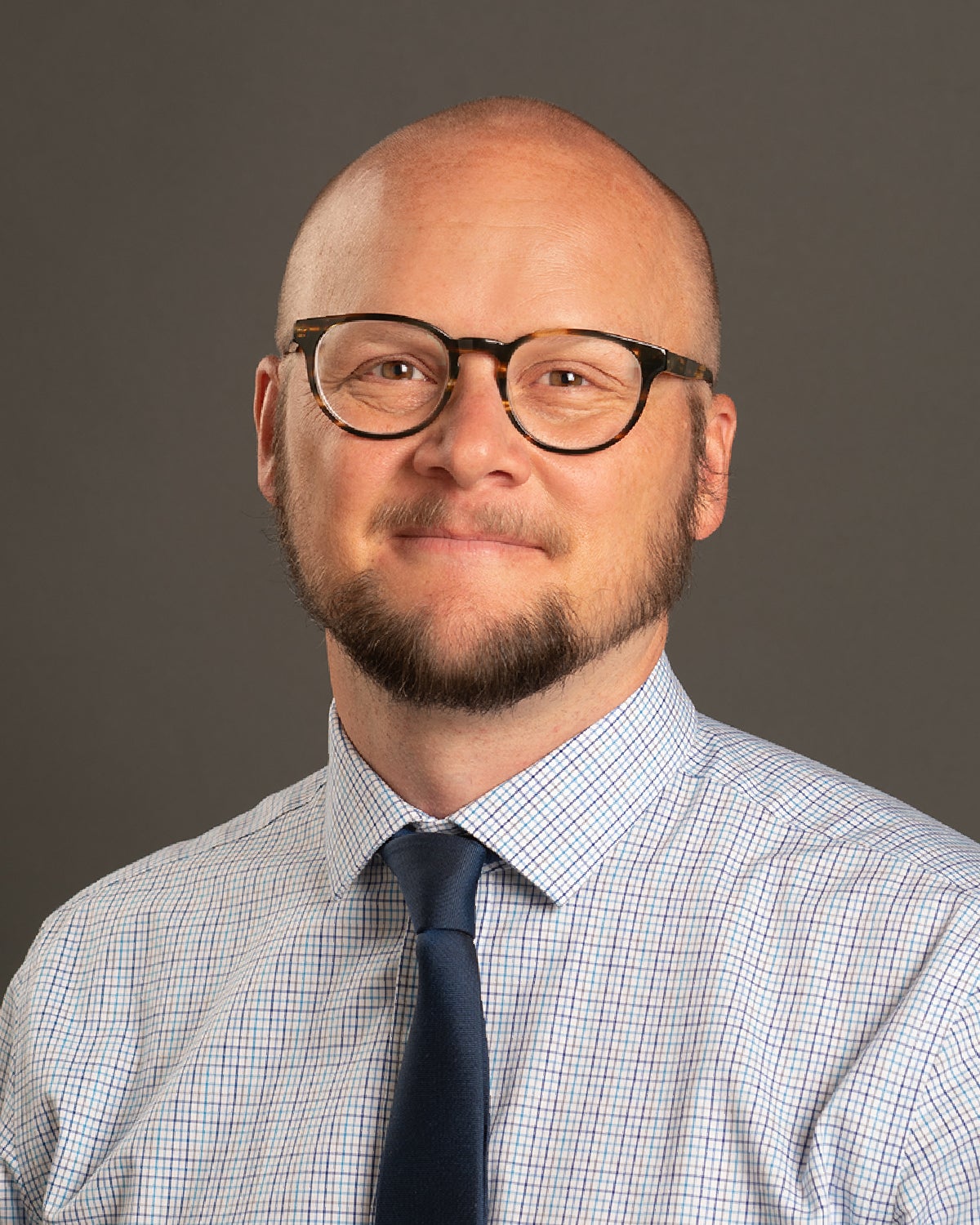
Director for Center for Teaching and Learning
He/him/his
Daniel Sanford is the Executive Director of the Center for Teaching and Learning. He received his PhD in Linguistics from the University of New Mexico (2010); his research in cognitive linguistics focuses on metaphor, idiom, and the role of frequency effects in shaping the structure of language. Within the scholarship of teaching and learning, his areas of specialization include the cognitive underpinnings of learning, metacognition, Writing Across the Curriculum, universal design for learning, teaching across student difference, and involving undergraduate and graduate students as partners in the teaching mission of the university. Previously, Dan served as director of Writing and the Academic Resource Commons at Bates College, and director of the Center for Academic Program Support at the University of New Mexico. He is the author of The Rowman & Littlefield Guide for Peer Tutors and co-author of The Rowman & Littlefield Guide to Learning Center Administration: Leading Peer Tutoring Programs in Higher Education, as well as co-editor of the Rowman & Littlefield series Theory & Practice for Learning Center Professionals.