Metabolic tests assess how the body uses energy at rest and during exercise. These tests may include resting metabolic rate, VO₂max, lactate threshold, ventilatory threshold, sub-maximal testing, exercise metabolic rate, and maximal heart rate testing. Results can help guide health, fitness, endurance performance, and individualized training zones based on heart rate, pace, or power.
- Maximal Oxygen Consumption (VO2 max): This is a test conducted to determine the maximal amount of oxygen the body is able to consume per minute of physical activity. This measurement is used to determine cardiovascular fitness level and can somewhat predict aerobic performance.
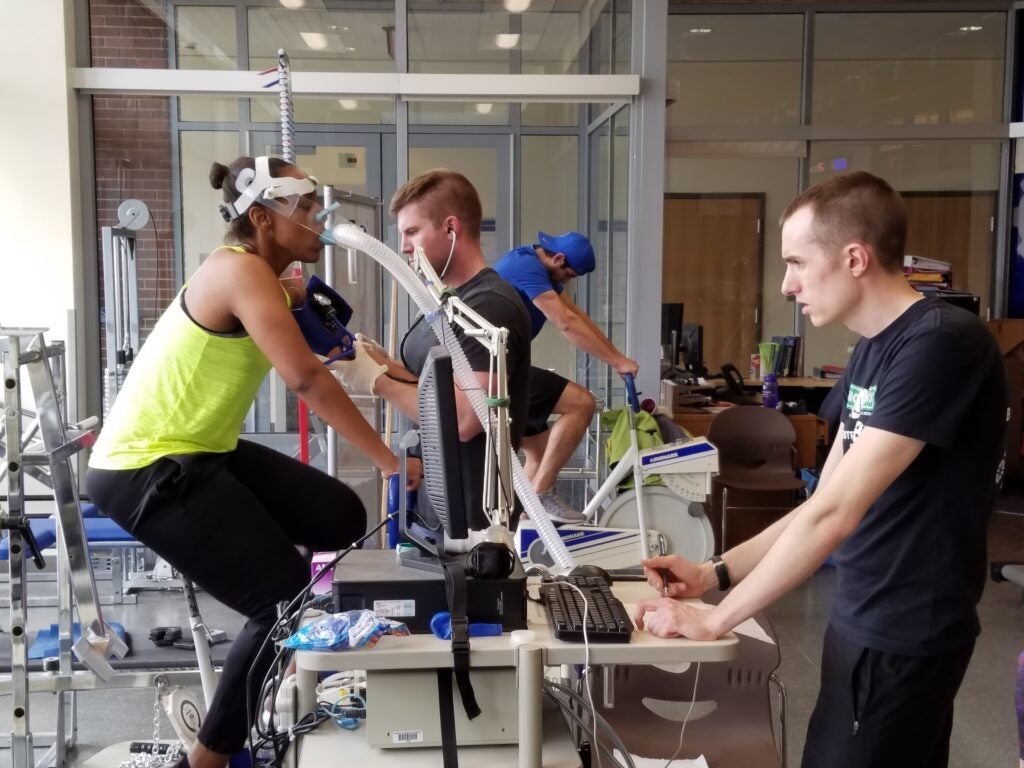
- Lactate Threshold: A lactate threshold test measures how your body responds to increasing exercise intensity. Small blood samples are taken from the earlobe or finger throughout the test to measure blood lactate levels and identify the intensity at which lactate begins to accumulate more rapidly. This information helps determine individualized training zones and can be used to guide endurance training, pacing, and performance goals for activities such as running, cycling, triathlon, and other aerobic sports.
- Assessing Maximal Heart Rate: A maximal heart rate test is used to determine the highest heart rate an individual can achieve during progressive, high-intensity exercise. This information can help establish more accurate training zones, guide aerobic exercise prescription, monitor training intensity, and support performance goals.
- Sub-maximal Exercise Assessment: A sub-maximal exercise test is used to estimate aerobic fitness, exercise capacity, and appropriate training workloads without requiring a person to exercise to maximal effort. Compared with maximal testing, sub-maximal testing is less intense and is often a practical option for assessing fitness, prescribing exercise intensity, or monitoring changes over time.
- Resting Metabolic Rate: Your resting metabolic rate (RMR) is the energy that your body needs to maintain vital functions while at rest. This value helps you calculate your total daily energy expenditure, estimate the energy sources being utilized, and determine your caloric intake requirements.

Available Tests
Aerobic Capacity (Maximal Oxygen Consumption, V̇O2 max)
The maximal oxygen consumption test is a measure of aerobic capacity. It is a maximal effort test that is conducted while connected to a metabolic cart that measures oxygen consumption and carbon dioxide production. This test determines the absolute maximum amount of oxygen that the individual can consume during aerobic exercise and is useful for prescribing training intensities for endurance athletes, monitoring training effects of aerobic activity, and measuring changes in health across time
What to expect
Changing facilities are available in the lab. Do not consume any food or drink 3 hours prior to testing (preferably a light meal only at that time). Wear running clothes and shoes for the treadmill, setting up your own bike and CompuTrainer is an option.
Lactate Threshold
A lactate threshold test measures how your body responds to increasing exercise intensity. During the test, you will exercise on a treadmill, bike, or rower while the workload gradually increases in stages. Small blood samples are taken from the earlobe or finger throughout the test to measure blood lactate levels and identify the intensity at which lactate begins to accumulate more rapidly.
This information helps determine individualized training zones and can be used to guide endurance training, pacing, and performance goals for activities such as running, cycling, triathlon, and other aerobic sports.
What to expect
Please wear comfortable workout clothing and suitable exercise shoes. Changing facilities are available in the lab. Avoid eating or drinking for three hours before the test; a light meal during that time is preferred. The test will become progressively more challenging, but staff will guide you through each stage and monitor you throughout the assessment.
Maximal Heart Rate Test
A maximal heart rate test is used to determine the highest heart rate an individual can achieve during progressive, high-intensity exercise. This information can help establish more accurate training zones, guide aerobic exercise prescription, monitor training intensity, and support performance goals.
During the test, exercise intensity gradually increases until the individual reaches maximal effort or can no longer continue. Heart rate is monitored throughout the assessment by trained staff. Testing can be performed using a variety of exercise modes, including treadmill running, cycling, rowing, or other ergometers available in the Human Performance Lab.
Sub-maximal Exercise Test
A sub-maximal exercise test is used to estimate aerobic fitness, exercise capacity, and appropriate training workloads without requiring a person to exercise to maximal effort. Compared with maximal testing, sub-maximal testing is less intense and is often a practical option for assessing fitness, prescribing exercise intensity, or monitoring changes over time.
Testing may be performed using a treadmill, cycle ergometer, or other available exercise equipment. During the test, exercise intensity gradually increases while heart rate, workload, and other responses are monitored by HPL staff.
What to expect
Please wear comfortable workout clothing and appropriate exercise shoes. Changing facilities are available in the lab. Avoid food and drink for 3 hours before testing, with a light meal preferred at that time. The test is designed to be challenging but not maximal, and staff will guide you through each stage of the assessment.
Resting Metabolic Rate
Resting metabolic rate is the energy required by the body to maintain the vital functions of the body in a resting state. This value allows you to calculate total daily energy expenditure, approximate the energy substrates being used, and to estimate caloric intake needs. During the assessment, you lie comfortably while a clear ventilated hood is placed over your head and shoulders. Using a Parvo Medics metabolic cart, we analyze the oxygen you consume and the carbon dioxide you produce to calculate your individual energy needs with high accuracy. The test is simple, non-invasive, and takes about 30 minutes, providing valuable insights to guide personalized nutrition, weight management, and performance fueling strategies.
What to expect
Changing facilities are available in the lab. Do not consume any food or drink 3 hours prior to testing (preferably a light meal only at that time). Wear comfortable clothing, the test itself takes approximately 30 min.